By Z. Aw | Published | Updated
Strix Halo, DGX Spark, M3 Ultra: choosing a local-AI workstation in 2026
Three classes of desktop machine now dominate the local-AI conversation: AMD's Ryzen AI Max+ 395 (codename Strix Halo), NVIDIA's DGX Spark, and Apple's M5 Ultra Mac Studio. Each holds at least 96GB of unified memory, each runs production-class models on a single box, and each comes with a different idea about who you are and what you are trying to do.
We run Strix Halo daily as the inference backbone for our news pipeline, our sector advisor agents, and Lyra. We have not put a DGX Spark or M3 Ultra into production for ourselves, but we have evaluated both for client work and read every credible benchmark we could find. What follows is the practitioner's view: where each box wins, where each box loses, and what is coming behind them in 2026 and 2027.
For the deployment side, live-measured throughput, quantization, and how we stand up a governed private LLM on these boxes, see our Private & On-Prem LLM Deployment guide.
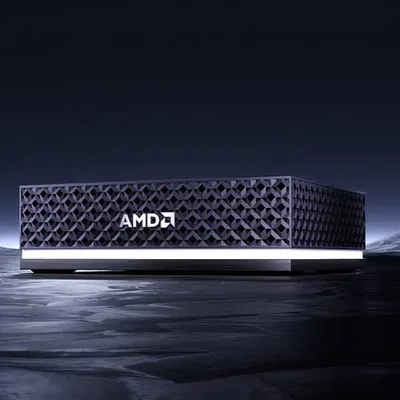 AMD Strix Halo
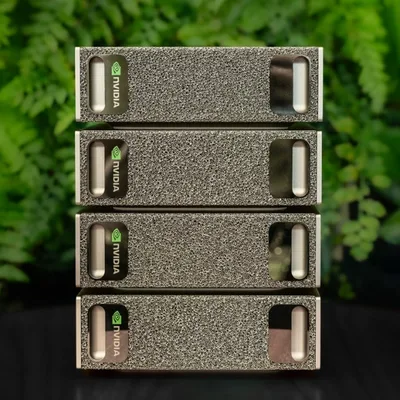 NVIDIA DGX Spark
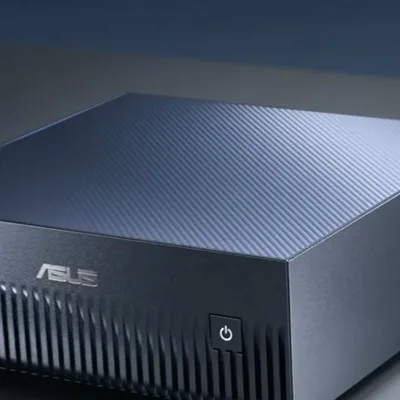 ASUS Ascent GX10
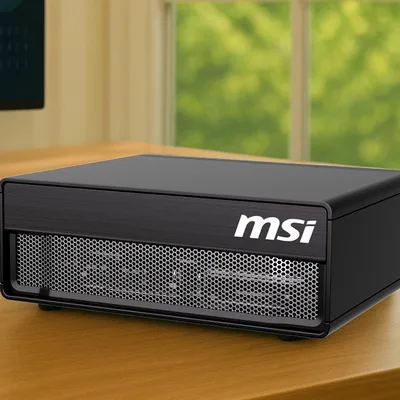 MSI EdgeXpert
 ASUS ROG Flow Z13
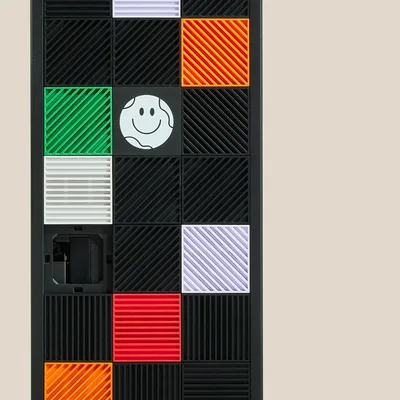 Framework Desktop
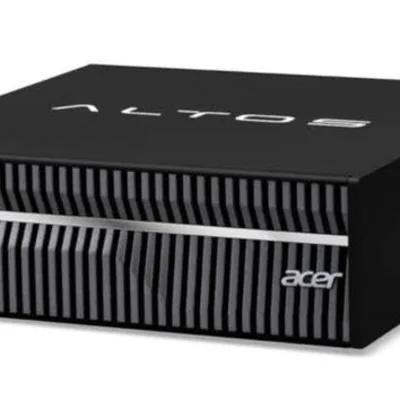 Acer Altos BrainSphere
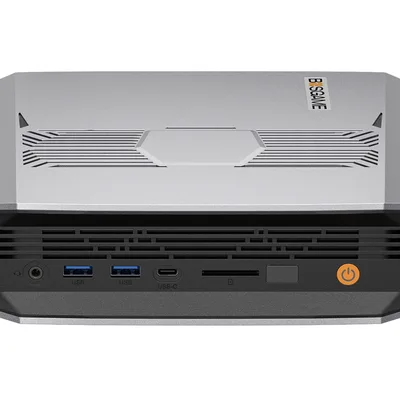 BOSGAME M5
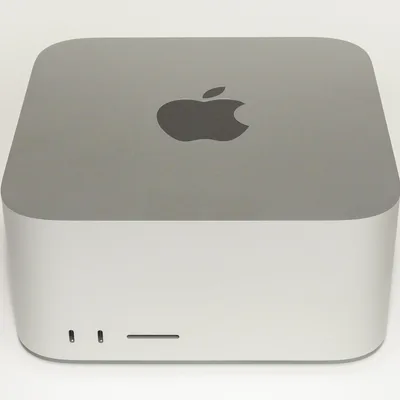 Apple Mac Studio
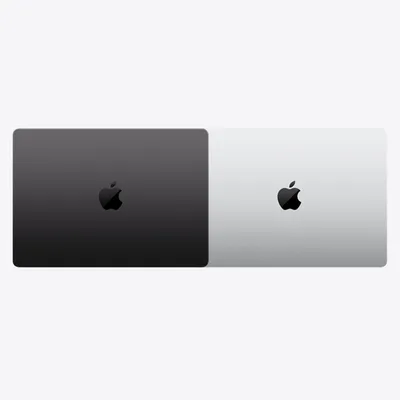 Apple MacBook Pro
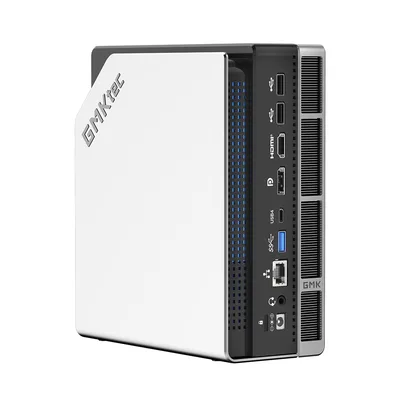 GMKtec EVO-X2
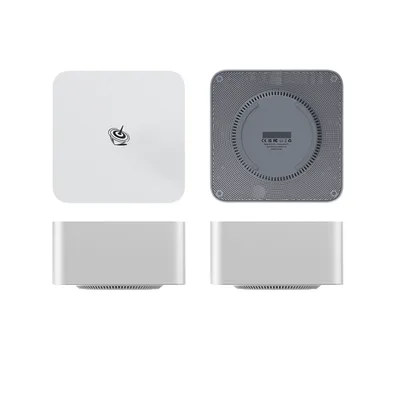 Beelink GTR9 Pro
The three platforms, side by side
AMD Ryzen AI Max+ 395 (Strix Halo). A Zen 5 CPU bonded to a Radeon 8060S iGPU and an XDNA NPU, sharing one pool of unified memory. The Framework Desktop, GMKtec EVO-X2, Beelink GTR9 and HP ZBook Ultra G1a all carry the same chip in different chassis. Linux is the strongest software story; Windows works but ROCm there is still catching up.
NVIDIA DGX Spark. A GB10 Grace Blackwell APU with the full CUDA-X stack baked into DGX OS. ASUS, Lenovo and HPE all sell badged variants of the same reference design. You put this on a desk when your team's muscle memory is CUDA, NCCL and the nvidia container catalog.
Apple M5 Ultra Mac Studio. Two Max dies fused over UltraFusion, with a unified memory ceiling far above the others and the highest memory bandwidth in the desktop class. It shipped in September 2026, bringing Neural Accelerators to the Ultra tier. MLX is the native runtime; llama.cpp and PyTorch via MPS work with a quality-of-life tax.
Memory and bandwidth decide what each box can run and how fast. Here they are live and sourced, kept current on our own tracker rather than typed into this page:
How they actually differ in production
The spec sheets disagree on how to score these machines because the scoring depends on workload shape. Three lenses make the differences readable.
Memory bandwidth and the model size you can run
Token generation on transformer models is bandwidth-bound past a certain model size, not compute-bound. This is the single most important number to internalise.
The Mac Studio's memory bandwidth gives it roughly three times the steady-state token throughput of either Strix Halo or DGX Spark on the same model. On a 70B-class dense model in BF16, that is the difference between a usable interactive coding assistant and an experience that feels like waiting for a fax. If your workflow is chatting with a 70B model and feeling responsive, the Mac is the answer that arrives without an asterisk.
Strix Halo and DGX Spark sit in the same bandwidth band. Both run a 35B-class mixture-of-experts model responsively for text, and both push down to 4-bit quantisation for dense 70B and accept a different speed-quality curve. The live numbers below are one model measured on each box, so the ranking is honest rather than cherry-picked.
Compute throughput and image-class workloads
For everything that is not text token generation - image and video generation, vision-language inference, dense matrix workloads - compute throughput matters again, and the picture inverts.
The DGX Spark pushes around 120 TFLOPS at BF16 on tested image-generation workloads, generating FLUX.1 Dev images roughly 2.5 times faster than the Strix Halo, which sits closer to 46 TFLOPS in the same test. NVIDIA's GB10 silicon is engineered for this; its sparsity-aware Tensor cores do real work on workloads that match the data shape. Strix Halo can do these workloads, just not with the same wallclock.
The M3 Ultra falls between the two on raw compute, but its Neural Engine path delivers very competitive image-generation throughput once the workload is ported to MLX or Core ML. The catch is the porting effort. If your image pipeline is built around ComfyUI on a CUDA stack, the Mac is a rewrite.
An interesting outlier: in double-precision HPC workloads (the kind a research lab actually cares about), Strix Halo posts roughly 1.6 TFLOPS FP64 against the Spark's 0.7 TFLOPS. AMD's chip retains broader IEEE precision support; NVIDIA's GB10 is heavily slanted to AI-shape arithmetic.
The software story is not optional
This is where most teams underweight the decision.
The DGX Spark gives you CUDA, cuDNN, NCCL, TensorRT-LLM, the nvidia/ NIM containers, and DGX OS pre-tuned for those layers. Every recent paper's reference implementation has CUDA paths that build out-of-the-box. If your team has trained on NVIDIA hardware for the last decade, the Spark is the lowest-friction port of that experience to a desk.
Strix Halo gives you ROCm 7.x, Vulkan, llama.cpp Vulkan/HIP, PyTorch ROCm, and an active community of kyuz0, hec-ovi, IgnatBeresnev, and others maintaining toolboxes for the gfx1151 GPU target. Real workloads we have run land on production reliability after a weekend of configuration; getting there is better documented today than it was six months ago, but it is still real work. Some workloads (vLLM with bleeding-edge model classes is the example from our last month) are not yet stable on gfx1151 - they will be, but on a timeline you cannot dictate.
The M3 Ultra gives you Apple Silicon, MLX, Metal Performance Shaders, and the warmest single-vendor support story of the three. It also requires you to live entirely inside Apple's view of the world: no NVIDIA containers, no ROCm, and a constant low-grade compatibility tax on any open-source project that is not first-class on macOS.
The family - what you are actually buying into
None of these are a single SKU. Each is the leading product in a family with surrounding boxes that solve adjacent problems.
The AMD Strix Halo family
Strix Halo is the Ryzen AI Max+ 395. A wider Ryzen AI line sits around it: the Max 390 and 385 with smaller core and memory ceilings, and the Ryzen AI 9 HX 370 one tier down, which we see in cheaper SG-import mini-PCs. The boxes shipping Strix Halo today are the Framework Desktop, GMKtec EVO-X2, Beelink GTR9, HP ZBook Ultra G1a and the ASUS ROG Flow Z13. We have run the Framework and the EVO-X2 in client deployments and would order either again; Framework's repairability is genuine, and the EVO-X2 is cheaper for the same silicon.
The NVIDIA DGX family
The Spark sits at the bottom of the DGX desktop line, with the DGX Station a tier above it and the rack DGX systems, the USD 300,000-plus class, above that. It also ships rebadged as the ASUS Ascent GX10, the Lenovo ThinkStation PGX and an HPE developer-class equivalent; the reason to pick a partner SKU over the Founders Edition is local support contracts, not silicon. If you outgrow the Spark, the honest on-ramp for most teams is cloud H100 or H200 capacity, not the next box up. The Spark is best understood as a developer endpoint, not the bottom rung of a hardware ladder.
The Apple Silicon family
The M-series Ultra Mac Studio leads the desktop side, with the Mac Studio Max at half the bandwidth and two-thirds the price, the Mac Pro in a tower with PCIe slots for media buyers, and the MacBook Pro Max up to 128GB for mobile work. The current box is the M5 Ultra Mac Studio from September 2026; a discounted M3 Ultra is the value alternative now that it is a generation behind.
What is coming next, and what to wait for
If you have a 6-12 month buying horizon, three roadmaps are worth tracking.
AMD: Gorgon Halo (2026), Medusa Halo (2027)
Gorgon Halo (Ryzen AI Max 400 series) is the near-term refresh, shipping from Q3 2026 on the same Zen 5 and RDNA 3.5 family. The step that matters is capacity: the top parts carry up to 192GB of unified memory against 128GB on Strix Halo today, while clocks and bandwidth move only modestly. If you are buying Strix Halo now, Gorgon will not embarrass that decision. If a 128GB ceiling is your actual constraint, it is worth the wait.
Medusa Halo (Ryzen AI Max 500 series) is the real next-generation step, expected 2027-2028. It is rumoured to land Zen 6 cores, an RDNA 5 GPU, and - most importantly - LPDDR6 memory, which would lift bandwidth from today's roughly 256 GB/s to something approaching 460 GB/s. That is roughly 80% more memory bandwidth, which on token-bound workloads translates almost directly into 80% more tokens per second. Medusa Halo would close most of the bandwidth gap to today's M3 Ultra at a far lower price point.
NVIDIA: DGX Spark refresh, Vera Rubin desktop
The Spark's silicon is GB10, derived from the Grace Blackwell line. The successor architecture is Vera Rubin, with first products expected to ship into the data centre across 2026 and into 2027. NVIDIA has not committed to a desktop Vera Rubin product, but a refresh of the Spark to Rubin silicon in late 2027 is the path the roadmaps point to.
Closer in: the DGX Station, due in the second half of 2026, sits a full tier above the Spark. It pairs a GB300 Grace Blackwell Ultra with around 780GB of coherent memory, at list prices roughly USD 95,000 to 123,000. That is a different budget class, not a Spark upgrade. If your workload is genuinely 96GB-class and growing, it is the box to keep an eye on.
Apple: M5 Ultra shipped, M7 Ultra next
Apple skipped the M4 Ultra, because the M4 Max never carried the UltraFusion link an Ultra needs. The M5 Ultra landed instead, in a new Mac Studio announced on 25 August 2026 and shipping from 22 September, from USD 5,499. It brings Neural Accelerators to the Ultra tier for the first time and roughly 4.3 times the AI compute of the M3 Ultra. The next Ultra step is expected around the M7 generation in 2028, with an M6 Ultra likely skipped. Apple's bandwidth advantage on token throughput is structurally sticky, and should hold across that gap.
How to choose, in three sentences
If your work is NVIDIA-shaped: training small models, running CUDA-native research code, deploying NIM containers - buy the DGX Spark, accept the price, and budget the time savings against a year of CUDA-versus-ROCm friction.
If your work is bandwidth-bound and you live happily inside Apple's stack: buy the M5 Ultra Mac Studio that shipped in September 2026, or save money on a discounted M3 Ultra. Bandwidth will continue to be where Apple wins.
If your work is local LLM inference at the 30-50B class with predictable throughput, image generation that does not need the absolute fastest box, and a budget that wants to deploy something this quarter: Strix Halo is the answer. We have shipped real client workloads on it. The community is healthy. The price/performance is unbeatable for the workload class.
The decision SMEs in Singapore actually face
The cost picture for SG businesses is sharper than the global one. Cloud GPU spend in Singapore carries roughly the same per-hour rate as the US or EU, but local revenue per AI workload sits lower in many sectors. The gap between cloud-cost-curve and SME-revenue-curve is what kills sustained AI deployment in this market - PwC Singapore's commentary on Budget 2026 names it directly: SMEs explored AI tools, then "recurring operating costs such as the cost of tokens or licenses to use cloud and AI services soon outweighed perceived benefits."
A SGD 3,500 Strix Halo Framework Desktop sitting on a desk in Tuas or Tai Seng turns the recurring-cost shape into a one-time capital cost plus a small electricity line. For the workload classes we routinely see in our SME advisory - document classification, supplier extraction, internal search, content generation, sector triage - the local box is the right shape of answer.
The DGX Spark and M3 Ultra are excellent machines for teams that already have the infrastructure and software muscle to extract their advantages. For an SME making its first serious AI hardware decision, the Strix Halo class buys you time and certainty. The other two buy you peak performance you may not be set up to exploit.
What a single Strix Halo box is actually capable of
To give a sense of the workload density a single 128GB Ryzen AI Max+ 395 supports - based on what we've tested and put into production over the last six months - here's the practical capability envelope:
- Text inference at the 30-50B class: large mixture-of-experts models running responsively for chat, drafting, classification, structured extraction, and agentic tool use.
- Vision-language inference: 30B-class VLMs reading photos, screenshots, and document scans for layout, OCR, and structured answer extraction.
- Layout-aware OCR for messy real-world documents: phone-photo invoices, delivery orders, mill certificates, multi-page scans, and mixed-language letterheads - a class of input where cloud OCR APIs are pricey per page and most of the heavy lifting happens locally.
- Image generation: Flux, SDXL, and similar diffusion models for marketing, mock-ups, and avatar work, running through a ComfyUI-style graph environment.
- Smaller embeddings, classifiers, and re-rankers: as utility layers for search, deduplication, and routing - the unglamorous workloads that tend to be the highest-volume in a real deployment.
- Multiple of the above, simultaneously: a 128GB unified memory pool comfortably fits a 35B language model, a 32B vision model, an OCR layer, and headroom for diffusion work - all live at the same time, served behind ordinary HTTP endpoints to whichever tools your team uses.
That last point is the one most teams underweight. The interesting workloads in an SME aren't single-model; they're compositions. A single supplier-extraction flow might touch a layout OCR model, an embedding model for matching, a 35B LLM for reasoning, and a classifier for routing - all in the same request. On a cloud-API stack each of those is a separate bill and a separate latency tail. On one Strix Halo box they're four function calls inside the same 128GB pool with no network between them.
We are not arguing this is the right answer for every business. We are arguing that "buy the cheapest cloud GPU" and "buy the most expensive local box" are both common mistakes that the framing above can save you from. For the workload classes most SG SMEs we advise are actually trying to ship - document understanding, internal search, content generation, sector triage, customer-conversation analysis - a single Strix Halo box is closer to overkill than undersized, and it's the closest thing in the desktop class to a real "set it once and forget" cost line.
Where to buy in Singapore
Direct links below. For live pricing and per-device configs across all of these, our tracker keeps them current.
AMD Strix Halo machines
- Framework Desktop (Ryzen AI Max+ 395, 128GB): direct from frame.work/desktop. Modular and repairable.
- GMKtec EVO-X2, Beelink GTR9 Pro, BOSGAME M5: the cheaper 128GB route, on Shopee SG and Lazada SG.
NVIDIA DGX Spark
- NVIDIA Founders Edition: nvidia.com/en-sg/dgx-spark.
- ASUS Ascent GX10 and Lenovo ThinkStation PGX: badged variants with local support, on Shopee SG and Lazada SG.
Apple Mac Studio
- Apple Singapore Store: apple.com/sg Mac Studio, or discounted on Shopee SG and in Best Denki / Challenger retail.
Further reading and community
For a normalized, source-linked view of the benchmark numbers across all of these boxes, start with our own tracker, TokenMark. The community resources below are the raw sources it pulls from, and the references we'd hand any client about to spend on the platform.
Strix Halo ecosystem
- sypherin/strix-halo-setup (ours): our own setup repo for the box this post is written from - Lemonade, Vulkan and the kyuz0 toolboxes wired together, with the patches, configs and gate scripts we actually run in production. github.com/sypherin/strix-halo-setup
- kyuz0/amd-strix-halo-toolboxes: gold-standard ROCm + Vulkan llama.cpp Docker toolboxes with a benchmark grid that informed our backend choices. github.com/kyuz0/amd-strix-halo-toolboxes
- llm-tracker.info Strix Halo page: the most comprehensive ongoing perf tracker for the platform. llm-tracker.info/Strix-Halo
- r/StrixHalo subreddit: small but high-signal community for Ryzen AI Max+ owners. reddit.com/r/StrixHalo
- Framework community forum - Strix Halo perf thread: the most active per-thread discussion we've found, with long-running benchmark + setup threads. community.frame.work Strix Halo perf tests
DGX Spark ecosystem
- NVIDIA Developer Forums - DGX Spark / GB10: official discussion category, where NVIDIA staff and Spark owners post benchmarks, software updates, and how-tos. forums.developer.nvidia.com DGX Spark / GB10
- NVIDIA DGX Spark marketplace + AI software stack: the canonical landing page for what's preloaded - NIM containers, NeMo, RAPIDS, the full CUDA-X stack. nvidia.com DGX Spark
- Simon Willison: "NVIDIA DGX Spark - great hardware, early days for the ecosystem": one of the most-cited independent reviews, honest about both strengths and the CUDA-on-ARM64 friction. simonw.substack.com DGX Spark review
- "DGX Spark - 4 Months Later" (Data Science Collective, Feb 2026): the longer-term ownership writeup we'd hand someone considering one today, post January-2026 software updates. DGX Spark 4-month review
Apple Silicon (M3 Ultra / M4 Max) ecosystem
- ml-explore/mlx: Apple's official ML framework for Apple Silicon. The native runtime that consistently beats Ollama / llama.cpp on the same Mac. github.com/ml-explore/mlx
- mlx-community on Hugging Face: the central hub for MLX-converted model weights - most popular open models (Llama, Qwen, DeepSeek, Mistral) are already converted and ready to run. huggingface.co/mlx-community
- llama.cpp on Apple Silicon - long-running benchmark thread: the canonical performance reference across every Mac chip variant. ggml-org/llama.cpp discussion 4167
- guruswami-ai/mlx-benchmarks: 290+ data points across 10 models on a 5-node M3 Ultra cluster, with cross-platform comparison against NVIDIA cards. github.com/guruswami-ai/mlx-benchmarks
Editorial transparency
None of the links in this post are affiliate links. We have no commercial relationship with AMD, NVIDIA, Apple, Framework, GMKtec, Beelink, BOSGAME, Lenovo, or any of the marketplace vendors listed above. The Strix Halo recommendation is the one we'd give whether or not we earned anything from the click - we run the machine ourselves, and the analysis is grounded in months of operating it as a production endpoint for our own clients.
Corrections
4 August 2026. This post was published in May 2026 and expected an M4 Ultra Mac Studio at or shortly after WWDC 2026. Apple has not released an M4 Ultra. The Mac Studio line currently tops out at the M3 Ultra at 819 GB/s, with the M4 Max at 410 to 546 GB/s (apple.com Mac Studio specifications).
10 September 2026. We restructured this post so the spec and benchmark numbers come from TokenMark, our own tracker, and stay current instead of ageing in the text. We updated the AMD roadmap: Gorgon Halo (Ryzen AI Max 400) is shipping from Q3 2026 with up to 192GB of unified memory. We added detail on the DGX Station (GB300 Grace Blackwell Ultra, around 780GB of coherent memory, list prices roughly USD 95,000 to 123,000). We corrected the Apple roadmap: Apple skipped the M4 Ultra and shipped the M5 Ultra Mac Studio, announced 25 August 2026 and available 22 September, so the M3 Ultra is now a generation behind. Product photos were removed pending correct ones.
Frequently asked
Strix Halo, DGX Spark, or M3 Ultra for a Singapore SME local-AI workstation?
Strix Halo for value - SG retail S$2,500–3,500 for 128GB (GMKtec EVO-X2 at the lower end, Framework Desktop at the higher), runs production agents. DGX Spark (~USD 4,699 from Feb 2026) if your team's muscle memory is CUDA. M3 Ultra Mac Studio if you need raw memory bandwidth (819 GB/s) for very-long-context agentic work and the Apple ecosystem. For most SG SMEs in 2026, Strix Halo wins on cost-per-deployed-agent.
Can a single 128GB workstation run a real production AI agent?
Yes. We run Qwen 3.6 35B, Qwen3-VL-32B, and a news-pipeline agent off a single Strix Halo box at Altronis. It serves multiple chat sessions, generates blog drafts, and runs the sector advisors at altronis.sg. Production-class for a sub-100-user SaaS or an internal-tool deployment.
Is buying a local AI workstation in Singapore tax-deductible?
Yes, as a capital expense for AI/automation infrastructure. Pair with PIC-equivalent productivity grants where applicable. The hardware also typically qualifies under EDG-funded AI projects when the box is part of a deployment.
Related reads
Last updated 4 August 2026.